Russia's Greatest Weapon May Be Its
Hackers- 蘇俄駭客 (2)
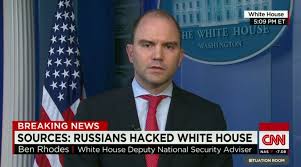
Yet some code—in particular, the family of “backdoors” into programs known as CHOPSTICK—regularly used by APT28 has been
linked to those virtual break-ins. And there’s less ambiguity about a similar
attack on an unclassified military network at the U.S. Department of Defense
last year. “We analyzed their network activity, associated it with Russia and
then quickly kicked them off the network," Secretary of Defense Ashton
Carter said in April.
Cyberspying on the West Wing’s emails may be cheeky, (impudent) but it’s not much different from the old-school
espionage and signals-intelligence games that Russia and America have been
playing for decades. What’s truly scary, on the other hand, is infiltrating
physical infrastructure in a way that could herald a new generation of violent
covert action and sabotage. “This is an entirely new way of waging war,” says
one former KGB general once posted as a spy to London who now works in the
private security sector. “It is like the invention of planes or submarines.
Suddenly you can attack the enemy from a completely new and unexpected
direction.... This is the essence of warfare: constant surprise.”
In April, Eugene Kaspersky, the Moscow-born CEO of Kaspersky Labs,
noted that there has been a dramatic surge in targeted attacks against power
grids, banks and transportation networks around the world—and warned that
groups targeting crucial infrastructure have “the capacity to inflict very
visible damage. The worst terrorist attacks are not expected.”

Among the most frightening new-generation cyberweapons are those
designed to target super-secure, so-called “air-gapped” systems that have no links to the Internet or outside networks. The
developers of Stuxnet bridged the air gap by developing ingenious programs that
infected CD-ROMs and memory sticks that then colonized Iran’s nuclear
development computers, ultimately inflicting devastating physical damage on
uranium centrifuges and forcing the Iranians to replace their entire computer
infrastructure. But a Stuxnet-like program that can be carried by email and
memory sticks, called Uroburos, has been around since 2011—and was diagnosed as
being of Russian origin. Uroburos targets Microsoft Windows, sets up
surreptitious communications with its parent network and is able to leap across
air gaps isolating secure networks from the Internet.
“The scary thing is that now everyone can do pretty much anything to anyone,” says Klimburg. He believes that one way to distinguish between
criminal and government cyberactivity is measuring the amount of programming resources an attack requires—like malware designed to leap across air gaps.
“If you see a huge amount of organization and programming going into an attack,
that’s a good indicator that there’s a government involved.”
The U.S. and Europe remain extremely vulnerable to infrastructure
attacks—especially as so much of these developed economies’ vital
infrastructure is now electronic, from financial systems to social networks.
One small example: In late April, a fleet of American Airlines Boeing 737s was
temporarily grounded after an iPad application known as an “electronic flight bag” used by pilots for preflight checks crashed. The iPad app replaced
13 pounds of paper manuals—but when it went down, so did the entire fleet.
More worrying, though still hypothetical: The U.S. Government
Accountability Office issued an official warning in April that “modern
aircraft’s interconnectedness can potentially provide unauthorized remote
access to aircraft avionics systems” and that an aircraft’s Wi-Fi access could be exploited by hackers. When security researcher Chris Roberts joked on Twitter about how
easy it would be to “start playing with the EICAS”—Engine-Indicating and
Crew-Alerting System—he was bumped off a flight. Boeing issued a statement
saying that “no changes to the flight plans loaded into the airplane systems
can take place without pilot review and approval.”
Other infrastructure is just as unprotected. A recent survey by
the energy industry consultants Black & Veatch revealed that only 32
percent of U.S. electric utility companies had integrated security systems with
the “proper segmentation, monitoring and redundancies needed for cyberthreat
protection.”
Personnel
work at the Air Force Space Command Network Operations & Security Center at
Peterson Air Force Base in Colorado Springs, Colo. July 20, 2010. The U.S. and
Europe remain extremely vulnerable to infrastructure attacks—especially as so
much of these developed economies’ vital infrastructure is now electronic, from
financial systems to social networks.RICK
WILKING/REUTERS
In February, President Barack Obama set up a new Cyber Threat
Intelligence Integration Center, described as “a national intelligence center
focused on connecting the dots regarding malicious foreign cyberthreats to the
nation.” Defense Secretary Carter made a trip to the heart of Silicon Valley,
this month to help improve relationships with tech companies after damaging
revelations by former National Security Agency contractor Edward Snowden about
digital surveillance. “This threat affects us all,” Carter told the assembled
techies. "There are also really great opportunities to be seized through a new level of partnership between the Pentagon and Silicon Valley.”
Behind the scenes, American spy agencies are also busy fighting a
secret war against cyberenemies. Snowden—now in hiding in Russia—publicly
revealed the massive scale of data mining by U.S. intelligence agencies, often
in apparent violation of protections for U.S. citizens’ privacy. But a recent
report by Kaspersky Labs suggests that the U.S. is no slouch in the hacking department either. A hacking collective that
Kaspersky’s team dubbed Equation Group—sponsored, it coyly says, “by a nation-state with nearly unlimited
resources”—has for
the past 14 years apparently been busy planting top-flight spyware around the
world, including a keystroke-logging program called Grok and a protective
encryption system known as GrayFish.

The top targets? Iran and Russia, followed by Pakistan, China and
India. The malware has targeted financial, government, diplomatic, aerospace
and telecommunications networks, as well as research institutions and
universities. According to Kaspersky’s engineers, the Equation Group designed
“the world’s most mysterious malware warhead” as well as “a secret storage
vault that survived military-grade disk wiping and reformatting, making
sensitive data stolen from victims available even after reformatting the drive
and reinstalling the operating system.”
Thanks to its vast resources, the U.S. may well be able to stay
one step ahead of its cyberenemies. But the problem with this new battlefield
is that none of the potential combatants know the rules—and, even more
dangerous, no one can
be certain of who the combatants are. “It is not always possible to distinguish between
cyberespionage, cyber covert action and, most importantly, preparation for
cybersabotage or war,” says Klimburg. “Serious misunderstandings are preprogrammed.... The consequences of misidentifying the motive of the attacker
could be, in diplomatic-speak,
‘inadvertent escalation’—or
accidental cyberwar.”
Richard Clarke, head of cybersecurity and counterterrorism
coordination in the George W. Bush administration, has warned of the dangers of
a “false flag” cyberattack designed to create tension between the U.S. and, for
instance, China and launched by a hidden third party.
Some academics have proposed “cybermilitary exercises” between the
United States and Russia as a vehicle for trust building. Others suggest
establishing “rules of the road”—a kind of informal agreement for cyberspace
that outlines what is a legitimate target for espionage purposes, with an
agreement not to target super-critical infrastructure such as power grids with
cyberespionage attacks.
But even if Beijing could be persuaded to come on board, the
current geopolitical tension between Washington and Moscow is hardly conducive
to gentleman’s agreements. Russian President Vladimir Putin has characterized
the Internet as a “CIA invention” and this month ordered the FSB to “cleanse
the Russian Internet” by forcing all Internet providers to keep their servers
in Russia—another turn of the screw in the Kremlin’s long-term plan to create a
separate Russian Internet, a project to which Putin has pledged some $100
million since 2012. And during the Sochi Olympics in February 2014, the FSB
deployed aggressive cyberspying tools designed to infect foreign visitors’
computers and cellphones with spyware through Wi-Fi networks and cellphone
towers.
It is unlikely that such a regime would shy away from using every
cyberweapon at its disposal. It’s equally unlikely that, faced with a barrage
of what White House spokeswoman Jan Psaki described as “hundreds of
cyberattacks a day,” the U.S. will cease and desist from developing some of the
world’s most sophisticated cyberweapons in retaliation. The cyber arms race is on.
Yet some code—in particular, the family of “backdoors” into
programs known as CHOPSTICK—regularly used by APT28 has been linked to those
virtual break-ins. And there’s less ambiguity about a similar attack on an unclassified
military network at the U.S. Department of Defense last year. “We analyzed
their network activity, associated it with Russia and then quickly kicked them
off the network," Secretary of Defense Ashton Carter said in April.
Cyberspying on the West Wing’s emails may be cheeky, but it’s not
much different from the old-school espionage and signals-intelligence games
that Russia and America have been playing for decades. What’s truly scary, on
the other hand, is infiltrating physical infrastructure in a way that could
herald a new generation of violent covert action and sabotage. “This is an
entirely new way of waging war,” says one former KGB general once posted as a
spy to London who now works in the private security sector. “It is like the
invention of planes or submarines. Suddenly you can attack the enemy from a
completely new and unexpected direction.... This is the essence of warfare:
constant surprise.”
In April, Eugene Kaspersky, the Moscow-born CEO of Kaspersky Labs,
noted that there has been a dramatic surge in targeted attacks against power
grids, banks and transportation networks around the world—and warned that
groups targeting crucial infrastructure have “the capacity to inflict very
visible damage. The worst terrorist attacks are not expected.”
Among the most frightening new-generation cyberweapons are those
designed to target super-secure, so-called “air-gapped” systems that have no
links to the Internet or outside networks. The developers of Stuxnet bridged
the air gap by developing ingenious programs that infected CD-ROMs and memory
sticks that then colonized Iran’s nuclear development computers, ultimately
inflicting devastating physical damage on uranium centrifuges and forcing the
Iranians to replace their entire computer infrastructure. But a Stuxnet-like
program that can be carried by email and memory sticks, called Uroburos, has
been around since 2011—and was diagnosed as being of Russian origin. Uroburos
targets Microsoft Windows, sets up surreptitious communications with its parent
network and is able to leap across air gaps isolating secure networks from the
Internet.
“The scary thing is that now everyone can do pretty much anything
to anyone,” says Klimburg. He believes that one way to distinguish between
criminal and government cyberactivity is measuring the amount of programming
resources an attack requires—like malware designed to leap across air gaps. “If
you see a huge amount of organization and programming going into an attack,
that’s a good indicator that there’s a government involved.”
The U.S. and Europe remain extremely vulnerable to infrastructure
attacks—especially as so much of these developed economies’ vital
infrastructure is now electronic, from financial systems to social networks.
One small example: In late April, a fleet of American Airlines Boeing 737s was
temporarily grounded after an iPad application known as an “electronic flight
bag” used by pilots for preflight checks crashed. The iPad app replaced 13
pounds of paper manuals—but when it went down, so did the entire fleet.
More worrying, though still hypothetical: The U.S. Government
Accountability Office issued an official warning in April that “modern
aircraft’s interconnectedness can potentially provide unauthorized remote
access to aircraft avionics systems” and that an aircraft’s Wi-Fi access could
be exploited by hackers. When security researcher Chris Roberts joked on
Twitter about how easy it would be to “start playing with the
EICAS”—Engine-Indicating and Crew-Alerting System—he was bumped off a flight.
Boeing issued a statement saying that “no changes to the flight plans loaded
into the airplane systems can take place without pilot review and approval.”
Other infrastructure is just as unprotected. A recent survey by
the energy industry consultants Black & Veatch revealed that only 32 percent of U.S. electric utility companies had integrated security
systems with the “proper segmentation, monitoring and redundancies needed for
cyberthreat protection.”
全文完
11/23/2015-


